Hiroyuki Sawano and The Music That Rewired My Brain Chemistry
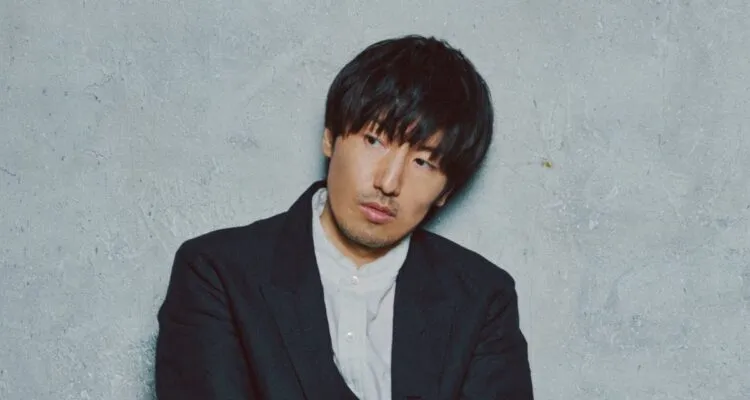
“Who is your favourite composer of all time?” I’ve had a long time to ponder this question; I looked through all of my biggest influences, all of my favourite game soundtracks, anime soundtracks, all of my favourite compositions whether I had played or watched the media they were from or not. A few names kept popping up from time and time again, but of them, Sawano would be the person whom I was a fan of the longest and whose influence in my own work probably shows the most.
I’ve had years go by where I convinced myself he was actually a bad composer all along and a complete fraud, and that he was, at least now, a mere shell of the person whose music I first fell in love with. Between the years 2018 and 2021, I had convinced myself he had completely fallen off and was no longer worth paying attention to; that his musical direction had grown to a plateau that reeked of done-to-death formulas, overused production templates, and obnoxious meandering melodies that didn’t really hook the same way that older pieces did.
But… At the end of the day, I always found myself coming back to his music. Whatever mood I’m currently feeling at a given moment, there’s always a track of his I go back to to supplement it, or to cheer me up from a lower point. It’s almost become a sort of comfort zone for me, a sort of ‘home’ to come back to. Perhaps there’s a degree of sunk-cost-fallacy at play here with how long I’ve been a fan of his music, perhaps it’s me feeling like I owe him a lot more slack due to how influential he had been to my own growth as a composer and music producer.
To be completely honest, I think this is all true, but I don’t really think my feelings are any less real despite it.
So, in the most non-performative, true to my heart way I can express myself, Hiroyuki Sawano is my favourite composer of all time; his music has without exaggeration changed my life and if it wasn’t for him, I would not be in this line of work, nor would I even have the love and appreciation that I have for music as a whole that I do now. In this post, I want to share some of the music that helped me reach this conclusion and the lessons I’ve learned from them. I hope that maybe you too can understand a little bit of why this man’s music means so much to me.
BLAZE [ZERO-TWO Ver.] (from: Sengoku Basara Ni, 2011)
Back when I first got into Sawano’s broader discography in 2016-2018, I mainly sought my intake through soundtrack album downloads and youtube uploads. Streaming had not yet taken off properly, especially in Japan, so there was no easy and accessible way to get into his older work unless you tracked down the full albums on piracy sites (or bought the CDs yourself, lol) This track was part of his first soundtrack-focused compilation album, BEST OF SOUNDTRACK [emU], which had selections covering everything from his early drama work, to his mid-2010s anime work. This was where I first discovered this track, and many other amazing pieces of music from his career.
The Sengoku Basara anime soundtracks are generally some of the coolest and most interesting works of his career in my opinion. The first two seasons’ soundtracks were full of cool musical explorations, with an eclectic mix of traditional Japanese-influenced orchestrations, rock band arrangements, and weird synth experiments. There’s a sort of obnoxiously whimsical ‘shounen’ quality to the music here that you don’t really associate with his later works for series like Attack on Titan, where he focused his musical development more on huge cinematic, Hollywood-inspired pieces. BLAZE ~Crimson Lotus~, the first version of this track, actually originated in the first season, however the arrangement was a lot more stripped down and synth-focused compared to the ZERO-TWO version, which opted to focus more on its rock elements.
BLAZE in all of its versions serves as the character theme for the character Yukimura Sanada, and it perfectly embodies his hot-headed attitude and his fighting spirit. The intro here starts with a distorted synth ostinato and muted guitar picking that develops into more energetic funk-inspired comping. Sawano splices in a few pre-recorded rap verses from Apple Jam Packs Voices, which are effectively gibberish and only add to the overall ‘energy’ without saying much at all, but man do they add to it. The band hovers on this for a few measures before bringing us into the main form with the strings, with a melody that starts in the middle ranges before the violins slowly open up into the higher registers, essentially building up into the main ‘chorus’.
The chorus… oh man it just hits. One of the more common things we used to find in a lot of Sawano’s older work is single-line melodies sung by an entire group of singers. The first time we heard this is in 2006’s N’s Aoi with the track determination, and this was something he largely kept up through the 2010s. By itself he already gives us a really memorable melodic line, especially with some of those melodic leaps, but the fact that it’s sung gives it this sort of ‘human’ quality to it that just elevates the feeling and makes you want to scream alongside it. On top, the violins take a beautiful soaring countermelody that perfectly melds together with the topline, before joining the choir in doubling the lead melody in the second half.
So much of Sawano’s music is centered around these distinct musical ‘moments’, where everything that comes before and after it is just set dressing written to highlight it. Some people would call it trite and overdone, but to me this is the core of what makes his music so special. When the solo violin takes reprises the chorus melody with a softer, mellowed out guitar accompaniment, on a written level it’s just the same material again, but the arrangement recontextualizes it to feel more solemn, as a brief pocket of air, before the instruments build back into the arrangement and dive right back into one final chorus. Everything in this track feels like it’s designed to get your blood pumping; it’s just so energetic and it has this inspirational quality to it that makes you feel like you can take on the world. It’s tracks like this that have fundamentally shaped my outlook on musical structures when writing scores, and it’s why I’m always so keen to write around these kinds of ‘musical moments’ even in the most unobtrusive incidental musical cues.
Rё∀L (from: Guilty Crown, 2011)
Guilty Crown, the quality of the anime notwithstanding, has one of, if not my favourite anime scores of all time because of the way Sawano blends together so many disparate genres and musical styles into one soundtrack. It has a whopping eight original vocal songs, a number of incredible cinematic orchestral underscores, and a bunch of weird miscellaneous experimental tracks ranging from electronic, ambient, to off-kilter piano solos. In a lot of ways the soundtrack direction is aimless, incoherent, all-over-the-place; even the vocal songs range from rock to nu metal, mellow RnB, and dance-pop, however when you listen to the music there’s still this fundamental throughline between all of them that you can just distinctly clock as being “Sawano”. To me, as someone who loves all sorts of music and prides myself as somewhat of a generalist, this is almost an ideal reputation to have - to be able to so expertly craft music of different styles that still uniquely carry your ‘voice’ in them.
When most people think of Guilty Crown’s iconic songs, usually they might bring up βios or Release My Soul, but I’ve chosen probably the weirdest one of the bunch and one that even die-hard Sawano fans barely seem to talk about. For one, this song was only used once in the series itself in a completely unremarkable scene lasting less than a minute, but when I first heard the full song when doing my first listen-through of the soundtrack album, it became an instant favourite of mine.
Unlike a lot of the other songs in the soundtrack, it’s the only one to sound so distinctly upbeat; the groove is just infectiously bouncy and the production is nothing like I've ever heard before. Sawano combines an electric sitar, piano, two hard-panned nylon guitars, and like 3 different Omnisphere bell ostinatos as the basis for the song’s arrangement and it makes for such a vibrant and colourful sound palette that you just would NOT find anywhere else. That kick sample is so obnoxiously bassy, but the hi hat and percussion loops are so tightly swung it comes together into a groove that is basically impossible not to dance to. On top of that, Cyua’s vocals are light and fluttery and they just float over the arrangement, with a simple but memorable lead melody that’s built around the downbeat. It’s kind of an insane production all around, completely unrestrained by the fact that Sawano is not at all familiar with idiomatic dance music production. This is the kind of song you could only get from asking someone who doesn’t produce typical dance music to make dance music; the combination of acoustic and electronic elements come together in perfect sync and of course, his skill as a composer shines through in just how memorable the tune itself is.
Rё∀L as a song taught me to how some of the coolest music ever can come together when you just throw shit together, and opened my ears to the weird, experimental, and multi-faceted nature of music production across genre labels and stylistic expectations - as long as you remember to still write a good ass song underneath all of that.
Thousand Seeds (from: Kodoku no Kake -itoshiki hitoyo-, 2007)
This is probably the most ‘deep cut’ selection that I’ll show in this post. Kodoku no Kake is a Japanese drama series that aired on TBS back in 2007. I’ve never seen it myself, and it seems to be really hard to get a hold of as far as I’ve tried, so I might not be able to even if I wanted to. It was scored during the first few years of Sawano’s scoring career, and the most notable thing about this score is that it’s the first (and really the only) time in his career that Sawano was asked to deliver a distinctly jazz and big-band flavoured score. In fact, in the booklet interview for this very soundtrack he talks about how difficult (and probably miserable) it was to write in a style completely unfamiliar to him, but impressively I think he still delivered one of the finest works of this period in his career.
The track that I’ve chosen here, however, is not one of those, in fact I would say it’s one of the more traditionally ‘Sawano-esque’ pieces in this soundtrack. Thousand Seeds is a melancholic string orchestra centered piece that is accompanied by this crazy rhythm section backing, with a driving drum groove, bassline, and some energetic piano comping. Before I listened to a lot of Sawano’s music, I hadn’t really heard much music that was able to tow the line between sad, melancholic writing with just the most uptempo underlying rhythmic feel, it’s like he was asked to make a track that was simultaneously supposed to make you cry AND rock the fuck out.
The coolest thing about this track to me is that the intro is just entirely out of key with the rest of the track, as it is just verbatim an Apple Loops kalimba sample slapped onto the beginning of the track, but to me it's this clashing tonality that adds a really cool texture to the whole thing. On a first listen, you expect the apple loops to go into a completely different kind of track, but then as elements slowly add together it kind of blends together into this... discordant mess before going into the ACTUAL main structure. It's such a weird, but honestly very cool start to a track that you don't really hear many composers do with their music that could only have been thought up by someone who was still relatively fresh into their career.
This piece would end up serving as the blueprint to a lot of similar themes that he would write later in his career, such as LiVE/EViL (from Maou, 2008) and tragedy (from Triangle, 2009). When I look back at it now, I get a kind of Xenoblade-esque quality with this track, with the most apt comparison I can make being Counterattack and Carrying the Weight of Life from Xenoblade 2 and 3 respectively.
Battle Scars (from: Blue Exorcist the Movie, 2012)
Blue Exorcist is one of my all time favourite manga and anime series, but I would never have gotten into it if it wasn’t for Sawano. In fact, so much of my media intake in my teens was because I was such a huge Sawano fan and wanted to watch everything that he was involved with, from the good, to the mediocre, to the bad (and to be completely honest most of it was in the latter two categories LOL). But on the occasion that one of these series was a hit, it was because Sawano’s score helped elevate an already good experience into something absolutely transcendental.
Battle Scars is a vocal song adaptation of 祓魔師強奏曲 第二楽章 : X from the first season’s soundtrack, with an added rock rhythm section and an insanely cool rap part written and performed by long-time collaborator David Whitaker. The original track was a synth-heavy battle cue that didn’t have too much in terms of intricate musical writing and melody, instead focusing more on building a really lush synth soundscape, with a lyrical horn melody that served to add to it, rather than to be the ‘lead voice’. This in turn, made it the perfect backdrop to be reinterpreted into Battle Scars, with the open space from the original track being filled in by David’s rapping.
There’s something about the more ambient interlude at 1:36 with his verses echoing over the soundscape as it slowly builds into a crescendo, finally coming together as the line “Blue flames ablaze, okay, let’s do this.” brings us into the musical climax. The feeling that rushes through me when the rhythm section comes back here is palpable, and there’s not that much anime music that has such a visceral effect to me the same way this song does. It’s become a staple of my exercise playlists because of this.
It’s such an incredible song that manages to do so much without even being too musically complicated, as all Sawano is really doing is building a backdrop for the lyrical performance. As a song, it doesn’t need a melody to be memorable, it doesn’t really need a complicated narrative arc in its structure to be effective, it just hits the right feelings and has the right amount of energy behind it.
Interestingly, the track has a lot of similarities to End Titles from Daft Punk’s score to Tron: Legacy, which came out around the same period. It’s hard to say whether it was intentional or not, as production timelines would largely have overlapped, but honestly the similarities are so clear it’s hard to completely write it off as a coincidence.
no2=THEMEX (from: Xenoblade Chronicles X, 2015)
I can’t really talk about Sawano’s influence on me as an artist without bringing up Xenoblade Chronicles X at least once. This game was (for me and many others) my introduction to his music and the work that began a decade-long hyperfixation.
I remember when I first saw the exploration trailer during one of the Nintendo Directs back in 2015, which showed us all of this beautiful footage of the player just… running through all of the gorgeous environments in the game, set to music from the game. To this day I can recall every second of this trailer vividly in my mind - the music set to these visuals were seared into my skull almost immediately.
Fast forward to now, and Xenoblade X (Definitive Edition) is my favourite game of all time, and I have so many fond memories playing through it, discovering the world of mira, and rocking out to Sawano’s absolutely transcendental score. There was a period of time at age 15 where I was so insufferably annoying about this game’s music and would share it with my friends at any given opportunity. Hell, I’m the reason why SiIvaGunner has so many Xenoblade X rips, with many of them literally dating back to the channel’s earliest years. So, when picking a song to represent this game, and to a broader extent this ‘era’ of Sawano, I felt it only appropriate to pick what is essentially this game’s main theme.
Truthfully, I think this is probably the greatest piece of music Sawano has ever written; If I were him, I would forever be touting this theme as my magnum opus—the absolute pinnacle of my career. I genuinely cannot listen to this track without going through a rollercoaster of emotions from start to finish, refusing to skip or fast forward any part of it. The quiet, somber intro with the plucky synth figure and electric guitar gradually building up as the orchestral elements are brought in. The way the main melody is played by both nylon guitar and french horn makes for such a unique doubling choice, but gives it this lonely, melancholy feeling perfectly fitting for the game’s story. Structurally, you can kind of split the piece in half, each having a ‘verse’ and a ‘chorus’, but the way Sawano takes us through this structure feels so natural and smooth, especially the build into that first ‘chorus’ by the strings. A lot of his newer work has the tendency to sound very rigid and formulaic (thanks in part due to his tendency to telegraph a lot of section changes with an obvious riser sweep), but here, he lets the contour of the melody serve as our ear’s guide.
I don’t want to talk through the whole structure of the song from start to finish so as to give you an opportunity to listen to it for yourself, but in this first half alone at barely 2 minutes in length, he manages to go through such a compelling narrative arc, with its low and high points leading us to a clear ‘musical moment’ at the chorus. The second half of the theme starts off much more dramatically, as the strings and percussion outline a darker, more frantic mood as the strong french horns take a leading role and the trashy rock drums (a staple of Sawano’s sound) come in loud to give the track a driving rhythmic element, laying out the foundation for the rest of the track (and briefly foreshadowing the final ‘chorus’).
It’s this final ‘chorus’ that defines this track, and one that serves as the musical ‘core’ of Xenoblade X’s music - a culmination of the emotional journey that came before it. When the cinematic drums telegraph this section and the horns and strings pick up into the main melody, that following downbeat just feels like the most cathartic musical moment ever. Whenever I listen to this section, no matter what thoughts are plaguing me that day, no matter what worries race through my mind then, 3:56 is the only thing that matters to me for just that moment, as I relay all of my pent up emotions through the music. He wrote such a heartbreakingly gorgeous melody for this theme that is just unforgettable. This is why I cannot just listen to this track passively anymore; every time this last section hits I find myself wanting to cry as Sawano manages to so expertly drag the listener through this musical journey and intertwine their emotional state with his music.
After nearly a decade of being a fan, if I were to boil down his music into one keyword… it would be “Catharsis”. It’s a word that I think describes his music perfectly; he embodies SO much strength, so much drama, and funnels it all into one musical moment, and you can hear it in every single example that I’ve previously talked about in this post. It’s the single most important quality in his work and one that you can hear from the very beginning of his career as a composer and arranger, to the music he puts out today both as a composer and as a j-pop producer. I believe it’s his ability to so expertly weave this element into his scores that makes his music such an important part of the identities of the many series’ that he’s scored; those deeply impactful moments in Gundam Unicorn would not have been as memorable if it weren’t for the themes he wrote underscoring them, and truthfully, shows like Attack on Titan would not have been the cultural phenomena that they ended up becoming if it weren’t for his music elevating those scenes.
It’s this mindset that has also shaped so much of the way that I write and structure my own music as a composer too, and while I don’t know if I am quite able to reach those highs just yet, I feel like I am getting closer and closer by the day. I hope that one day I will be able to write music that makes someone else feel the same way I feel about Sawano’s music.